While many locations and their range of stakeholders are enjoying the benefits of well-run marine national parks and marine protected areas, the situation in The Solomon Islands is somewhat different. On paper there are a number of protected zones and you will hear politicians making bold assertions of their intentions for the future of their seas. However, ask anyone in the know and on the ground and they will roll their eyes and tell you that any form of official marine protection is practically non-existent.
Examples of Functioning MPAs

Among the greatest success stories of marine conservation in the Solomons is the Arnavon Community Marine Conservation Area, established in 1995. This area is located in the north of the country between Santa Isabel and Choiseul and includes reef sites and lagoons. These valuable sites include a nesting ground for critically endangered hawksbill turtles. Rangers are stationed on the uninhabited island of Arnavon collecting and incubating eggs and offering constant protection to the area, which has also been shown to boast among the highest live coral coverage in the country.
Tetepare is another MPA covering 120 km2 (46 sq mi) in the New Georgia Islands in the north west of the Solomon Islands. Also created in 1995 this was created by the Tetepare Descendants Association who established a no-take zone enforced by rangers among whose jobs is to tag turtles (including leatherbacks) and protect and relocate turtle nests during the nesting season from September to April. They are also charged with monitoring the islands reefs and forests.
While these are among a small number of effective schemes in the Solomons it is unfortunate that since 1995 there have not been many other MPAs established.
Bottom-Up Efforts
It seems that the most effective protection that many regions can hope for is bottom-up, community led projects where local chiefs and their people take steps to monitor and protect the waters surrounding their islands. There seem to be many stories throughout the Solomons where communities are taking their own action to preserve their marine habitat.
Simon is the chief of a village in Florida islands and is one example of a person leading through action. He has established what he calls ‘Simon’s Nature Reserve’. He is a man on a mission to raise awareness of reef conservation and marine biology among his people and their neighbours. When the liveaboard Bilikiki comes to visit his island he will regularly come out to visit the boat on his hollowed canoe with pictures of all the fish present in his area and is particularly proud of his giant clams. He warns people of the dangers of being stung by resident lionfish and scorpionfish. He actively seeks out crown of thorns starfish and kills them before they can do too much damage to the hard corals, and is even experimenting with growing different corals. While his enthusiasm is great to see and he is no doubtless making a difference among his people and neighbours, there is no real regulatory or official aspect to his efforts.
Similar stories abound in different parts of the Solomon Islands. In Karamulu in the Russell Islands you will find Chief Raymond who has banned all fishing within a certain distance around the island to preserve the marine life that thrives among his pristine reefs. Eupi Island Resort in New Georgia also have a reef monitoring program. Interestingly their data shows some encouraging signs that the hard coral recover quite quickly after bleaching events provided such events do not follow each other in quick succession.
In the absence of any government-led initiatives it seems that these small scale local operations are the only way that reefs and their inhabitants can be protected. A lot of this relies on education and there are still informational hurdles to be overcome. For example, parrotfish and surgeonfish are traditionally eaten in the villages of the Solomon Islands. However algal growth can be a problem on these reefs and The Nature Conservancy undertook a leafletting campaign to educate communities on the benefits of protecting the herbivores of the reef so that they prevent excessive algal growth and restore balance to the reef. Instead they were advised to target pelagic species in deeper waters and to allow the numbers of herbivores to recover and nibble away at the algal problem.
Such educational efforts have to be viewed against a backdrop of long-established cultural practices. Catching and eating turtles for example, or hunting dolphins for their teeth might seem outrageous to the outsider but if tales are passed down the generations then such activities become the norm. In Malaita province shell money is still practiced and dolphin teeth are the highest currency of all. So cultural change does not happen overnight and the local islanders need to understand how they will benefit as a result of any such change.
The Official Line
The Blue Nature Alliance has long been working on improving the government led efforts at marine protection. They have been collaborating with IUCN Oceania and government ministries to support the Solomon Islands in achieving its commitment to protecting and managing 15% of its exclusive economic zone.
At the 3nd UN Ocean Conference in France in June 2025 Minister Trevor Manemahaga confirmed the Solomons Islands commitment to protecting this zone, equivalent to the size of Italy, reflecting the country’s ambition to safeguard marine biodiversity for future generations. He announced plans to establish multi-zoned marine protected and managed areas within the waters of Temotu and Makira Provinces, covering about 27,400 square kilometres. This project will be undertaken in collaboration with international partners including the Bezos Earth Fund, Bloomberg Philanthropies, World Conservation Society, WWF, The Nature Conservancy, and Pristine Seas.
The minister included a call for increased investment in such locally led conservation. He stressed that the country’s leadership and traditional knowledge must be recognised and supported as vital contributions to global ocean protection. “If we are to close the ocean protection gap, we must close the gap between promise and practice. Solomon Islands stands ready to lead… but we cannot do it alone,” he said. Hopefully this announcement does signal a change in approach where official marine protective measures can be effective and sustained.
Among the limiting factors of such is effective financial control that filters down to practical matters such as ensuring rangers in no-take zones are present at all times. Stories are told of places where the ranger’s day off is the day when everyone goes fishing! So ensuring that rangers are present and have the boats, fuel and authority to enforce regulations is clearly key. Whether the external investment that the minister calls for actually finds its way down the filter to such important elements of the project is a fear for those who are accustomed to witnessing dubious fiscal practices of those in positions of power.
Foreign Fishing Fleets And The Aquarium Trade
Another source of foreign funds comes in the form of fishing fleets and those who come to target specific species for the aquarium trade.
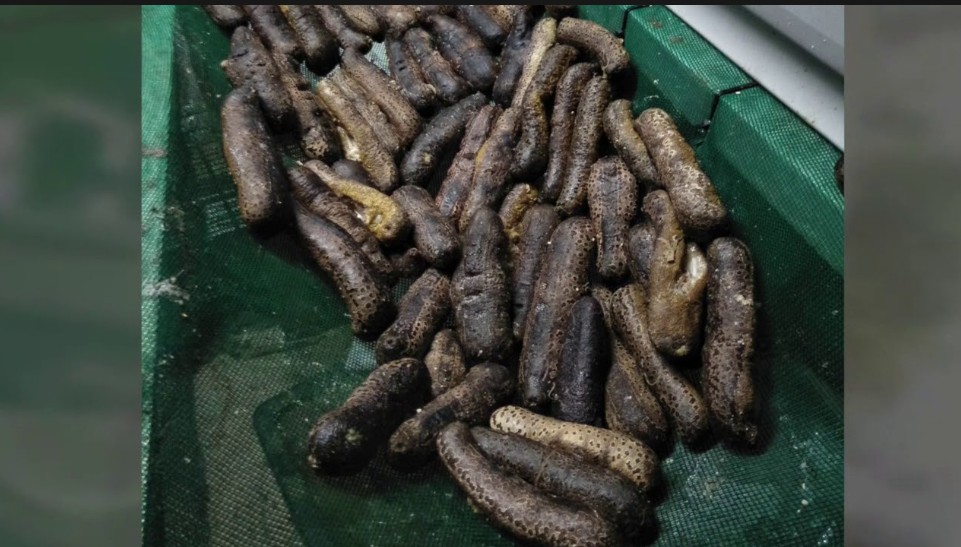
There is a huge market for sea cucumbers destined mostly for China. The government periodically issues an official announcement prevent this practice and then, for some reason will permit fishing for them again some period of time later. Strangely, on the very day such a permit is issued the port of Honiara will suddenly be full of Chinese fishing boats whose holds are filled with sea cucumbers, that have ‘just been caught’.
Sadly the shark populations have suffered significant decline over the years due to a similar relationship between officials and Chinese fishing fleets. The waters of the Solomons used to have much larger numbers of rays and sharks including white tips, black tips, grey reef sharks, silvertips and silkies. Much like many destinations in the world the numbers of sharks that remain are tiny in number compared to what they once were. There are said to be 4 high-end Chinese restaurants in Honiara all serving shark fin soup.
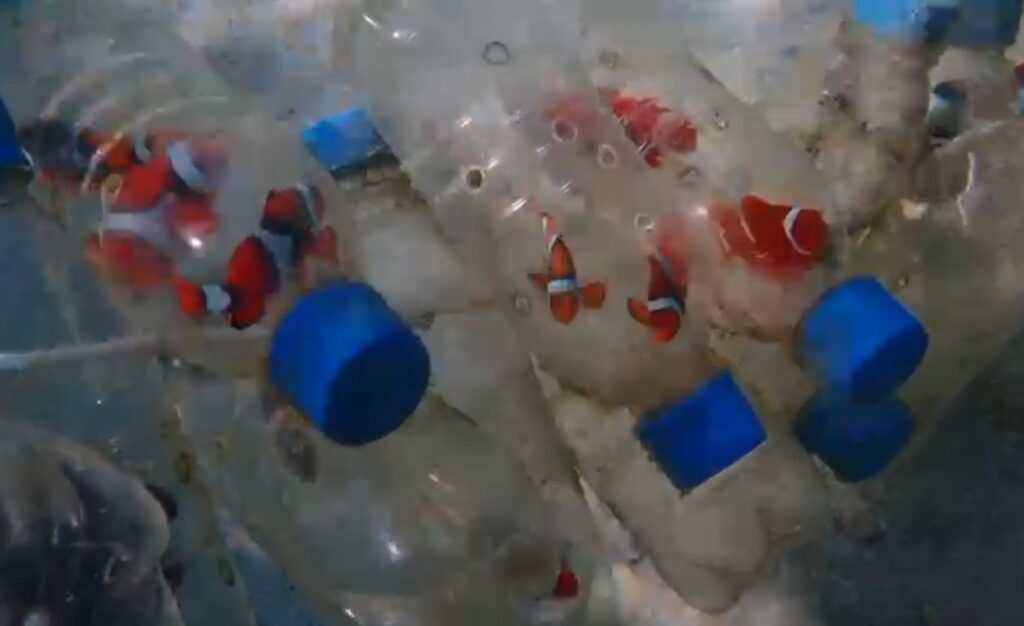
The aquarium trade is another that enjoys the “flexibility” of doing business in the Solomons. One cruise director came across a string of plastic bottles each containing clownfish destined for export. A Malaysian boat had visited the region and was offering 10 Solomon dollars (USD 1.20) per clownfish.
In a country where scuba diving is the number 1 tourism activity (followed by surfing, birdwatching and World War 2 tours) it seems strange that attitudes remain so far away from what is needed to preserve the marine environment. Then again, tourism is not a very high priority. It seems that extractive industries such as logging, mining and fishing are viewed as more desirable than opening up the country to greater tourism.
Conclusion

Much like a microcosm of the world’s oceans generally, the marine environment of the Solomons is under pressure from rising temperatures, over-fishing and exploitation. However, all is not lost.
Community led activities are getting underway all over the country and this alone gives hope for the future. If the government does follow through on its commitment to protect its waters in conjunction with the international conservation bodies then perhaps brighter days lie ahead. One would imagine that with tighter control on the fishing practices of foreign fleets, it wouldn’t take much for the seas of the Solomon Islands to rebound. So many of their reefs are in clear, unpolluted waters, far from the pressures of human populations that recovery could potentially take place very quickly and the species whose numbers have dwindled could thrive once more.
Gavin Macaulay